Category: Technology

  • Castle App Review: Features, Benefits, and Limitations

    Castle App Review: Features, Benefits, and Limitations

    Castle App is a versatile security application designed to enhance user protection through advanced monitoring and alert features. It aims to provide a comprehensive solution for individuals seeking to safeguard their digital presence, particularly on mobile devices. The app’s core functionality revolves around real-time threat detection, privacy controls, and user-friendly interfaces that make security accessible even to those without technical expertise. By integrating multiple layers of defense, Castle App offers users peace of mind in an increasingly complex digital environment.

    One of the standout features of Castle App is its ability to monitor login attempts and notify users immediately if suspicious activity occurs. This proactive approach helps prevent unauthorized access by alerting users before any damage can be done. Additionally, the app includes detailed logs that allow users to review past activities related to their accounts or devices. This transparency aids in identifying patterns or repeated threats, enabling more informed decisions about security measures.

    Another important aspect of castle app is its focus on privacy management. Users can control permissions granted to various applications installed on their device, reducing the risk posed by overly intrusive apps collecting personal data without consent. The app also provides recommendations for strengthening passwords and encourages regular updates for better protection against emerging threats. These combined efforts contribute significantly toward maintaining robust security hygiene.

    Despite these strengths, Castle App has some limitations worth considering. For instance, while it excels at detecting common cyber threats like phishing attempts or brute force attacks, it may not offer sufficient protection against highly sophisticated hacking techniques employed by advanced persistent threats (APTs). Users with critical security needs might find this gap concerning and may require supplementary tools alongside Castle App.

    The interface design prioritizes simplicity but occasionally sacrifices depth in customization options favored by power users who prefer granular control over every aspect of their security settings. Moreover, although the app supports multiple platforms including Android and iOS devices, certain advanced features are restricted based on operating system capabilities or subscription tiers which could frustrate some customers seeking uniform experiences across all devices.

    In terms of performance impact, Castle App operates efficiently without causing noticeable slowdowns or excessive battery drain during routine use; however, intensive scanning processes might temporarily affect device responsiveness depending on hardware specifications.

    Overall, Castle App delivers a balanced mix of essential security functions tailored for everyday users aiming to protect themselves from common cyber risks while maintaining ease of use. Its benefits include timely alerts about suspicious activity and practical privacy controls but it falls short in addressing high-level threat scenarios comprehensively and lacks extensive customization options preferred by expert users. Potential adopters should weigh these factors according to their specific requirements before committing fully to this application as part of their cybersecurity strategy.

  • Apple’s MacBook Neo 2026: A Budget‑Friendly Powerhouse

    Apple’s MacBook Neo 2026: A Budget‑Friendly Powerhouse

    A Fresh Take on Entry‑Level Macs

    Apple’s newest entry‑level laptop, the MacBook Neo, lands with a price tag that feels almost too good to be true: $599 for the base model. Powered by the same A18 Pro silicon that runs the iPhone 16 Pro, the Neo delivers a performance level that punches well above its price bracket. It’s a 13‑inch, fan‑less machine with a bright 500‑nit Liquid Retina display, a 1080p FaceTime camera and a solid aluminum chassis that feels premium despite the low cost.

    The Neo’s most eye‑catching visual upgrade is its colour palette, Silver, Blush, Citrus and Indigo, each paired with a matching keyboard back‑light colour (though the keyboard itself isn’t backlit). Apple markets it as the “most colourful MacBook line‑up ever,” and the result is a laptop that looks as good as it feels, even if it’s meant for students, casual creators and anyone who wants a Mac without breaking the bank.

    Performance: A18 Pro in a Laptop

    The heart of the Neo is Apple’s A18 Pro chip: a six‑core CPU, five‑core GPU and a 16‑core Neural Engine. In everyday use, web browsing, video calls, document editing, the Neo feels smooth and responsive. The unified memory architecture (8GB) and SSD options (256GB or 512GB) keep the system snappy and the Neural Engine makes on‑device AI tasks feel native.

    Video editing, a traditionally heavy workload for budget laptops, is surprisingly competent. While you won’t be rendering 4K timelines at warp speed, the GPU can handle light cuts and effects without stuttering. Battery life lives up to Apple’s claim: up to 16 hours of video playback on a 36.5Wh cell, which translates to a full day of typical student or office use.

    Build Quality and Design

    Apple’s hallmark aluminum unibody shows up in the Neo, giving it a rigid, premium feel that rivals higher‑priced MacBooks. The 13‑inch Liquid Retina panel (2408 × 1506, P3‑wide colour) is bright enough for indoor work and offers crisp text and vivid colours. The device is fanless, which means silent operation but also caps sustained performance under heavy loads.

    The trade‑off for the low price is a reduced port selection: one USB‑C port that supports USB 10Gbps/DisplayPort and a second USB‑C port limited to USB 2.0 speeds, plus a headphone jack. There’s no MagSafe, no Thunderbolt and the keyboard lacks backlighting, an omission that will sting for anyone who types in dim environments.

    Audio, Camera and Connectivity

    Two side‑firing speakers and a dual‑mic array deliver decent audio and clear voice capture for calls, while Apple’s Spatial Audio adds a modest sense of immersion for media consumption. The 1080p FaceTime HD camera, though not a game‑changer, is a step up from the 720p sensors still found on many low‑end laptops.
    On the connectivity front, the Neo supports Wi‑Fi 6E and Bluetooth 6.0, ensuring fast wireless performance for modern networks and peripherals.

    Charging: Faster Than the Boxed 20W

    Apple ships the Neo with a 20W USB‑C power adapter (except in the UK and EU, where it arrives charger‑less). In real‑world testing by ChargerLAB, that adapter tops out at roughly 18W of actual charging power. Apple’s own 35W Dual USB‑C Port Compact Power Adapter, available for $59, pushes the Neo to about 30W, shaving an estimated 20‑30 minutes off a full charge.

    Higher‑wattage Apple chargers (96W, 140W) don’t move the needle; the Neo’s charging circuitry caps out near 30 W. Third‑party 30 W‑plus chargers from brands like Campad Electronics can achieve similar speeds at a lower price, so the 35W Apple adapter is the sweet spot for those who want a modest boost without hunting for third‑party solutions.

    Value Proposition

    At $599 (or $899 for the higher‑spec model), the MacBook Neo sits squarely in the “best laptop for the price” category. Its combination of A18 Pro performance, a vibrant Retina display and a premium aluminum shell gives it an edge over comparable Windows ultrabooks that often sacrifice build quality for cost.
    The compromises, limited ports, lack of a backlit keyboard and a modest 8 GB of unified memory, are noticeable but understandable for a device targeting the education and entry‑level market. For students, casual creators and anyone who wants a Mac without the premium price tag, the Neo feels like a win.

    Bottom Line

    Apple’s MacBook Neo proves that you can deliver a respectable Mac experience at a budget price, as long as you’re willing to accept a few trade‑offs. The A18 Pro chip brings enough horsepower for daily tasks and light creative work, the design feels premium and the optional 35W charger offers a quick‑charge fix for those who need a faster top‑up.
    If you can live without a backlit keyboard, don’t need a plethora of ports and are comfortable with 8GB of RAM, the Neo is the most compelling entry‑level Mac on the market today. It may not replace the higher‑end MacBook Air or Pro lines, but for its price, it sets a new benchmark for what an affordable Apple laptop can be.

    MacBook Neo FAQs

    How much does the base MacBook Neo cost?

    $599 in the U.S. (the higher‑spec model with 512GB SSD is $899).

    What chip powers the Neo?

    Apple’s A18 Pro, the same six‑core CPU, five‑core GPU and 16‑core Neural Engine that runs the iPhone 16 Pro.

    Is the performance really “Mac‑level” at this price?

    For everyday tasks, web browsing, video calls, Office apps, it feels as snappy as any MacBook Air. Light video editing works, but don’t expect 4K render farms.

    How much RAM does it have?

    8GB of unified memory. It’s enough for the intended use cases, but you’ll feel the ceiling when you open many RAM‑hungry apps at once.

    What storage options are available?

    256 GB or 512 GB SSD, both fast NVMe.

    Does the Neo have a backlit keyboard?

    No. The keys are illuminated by a coloured LED strip that matches the chassis, but the keys themselves stay dark.

    What ports are on the machine?

    Two USB‑C ports – one full‑speed (10 Gbps/DisplayPort) and one USB‑2.0 only, plus a 3.5 mm headphone jack. No MagSafe, no Thunderbolt.

    How good is the display?

    A 13‑inch 500‑nit Liquid Retina panel (2408 × 1506, P3‑wide colour). Bright enough for indoor work, with crisp text and vivid colours.

    Is the laptop fan‑less?

    Yes. The A18 Pro runs silently, but sustained heavy loads will throttle once the chip warms up.

    What’s the battery life like?

    Up to 16 hours of video playback on a 36.5Wh cell, essentially a full day of typical student or office use.

    How fast does it charge?

    Out of the box you get a 20W USB‑C adapter (≈18 W actual). Pair it with Apple’s 35 W Dual‑Port Compact Power Adapter (or a comparable third‑party charger) and you’ll see about 30W input, shaving 20‑30 minutes off a full charge. Anything above 35W won’t go any faster.

    What about the camera and audio?

    1080p FaceTime HD camera, two side‑firing speakers, dual‑mic array and Apple’s Spatial Audio for a modest immersive experience.

    Which wireless standards does it support?

    Wi‑Fi 6E and Bluetooth 6.0.

    Who should actually buy the Neo?

    Students, casual creators and anyone who wants a Mac without the premium price tag and can live without a backlit keyboard, abundant ports or more than 8 GB RAM.

    Does the Neo replace the MacBook Air?

    Not really. It’s a budget alternative that sits below the Air in performance and features, but it raises the bar for what an entry‑level Mac can be.

    Are the colour options just for looks?**

    They’re real. Silver, Blush, Citrus, Indigo, each with a matching keyboard‑back‑light hue, making the Neo the most colourful MacBook lineup ever.

    Is the aluminum chassis truly premium?

    Yes. Apple’s unibody aluminum feels solid and rivals higher‑priced MacBooks, despite the lower price point.

    Any hidden costs?

    The UK/EU version ships charger‑less, so you’ll need to buy a charger separately. The 35W Apple adapter is $59; comparable third‑party chargers are cheaper but vary in quality.

    Will future macOS updates run smoothly?

    Apple promises at least five years of macOS support for its silicon, so the Neo should stay up‑to‑date well into the next decade.


  • Best iPhone 17 Pro Car Cradle: The 5 Top Picks for Secure, Charged and Connected Driving

    Best iPhone 17 Pro Car Cradle: The 5 Top Picks for Secure, Charged and Connected Driving

    The Ultimate Guide to Choosing the Best iPhone 17 Pro Car Cradle

    When you’ve just upgraded to the iPhone 17 Pro, the last thing you want is a flimsy holder that compromises safety, charging speed or signal quality on the road. A premium car cradle not only secures the device but also keeps it powered, maintains a strong data link for Apple CarPlay or Android Auto and if you need it, boosts cellular reception with an external antenna.

    Below is a ranked list of the five best iPhone 17 Pro car cradles currently available in the Australian market. Each option is evaluated on build quality, charging capability, case compatibility, installation method and overall value.

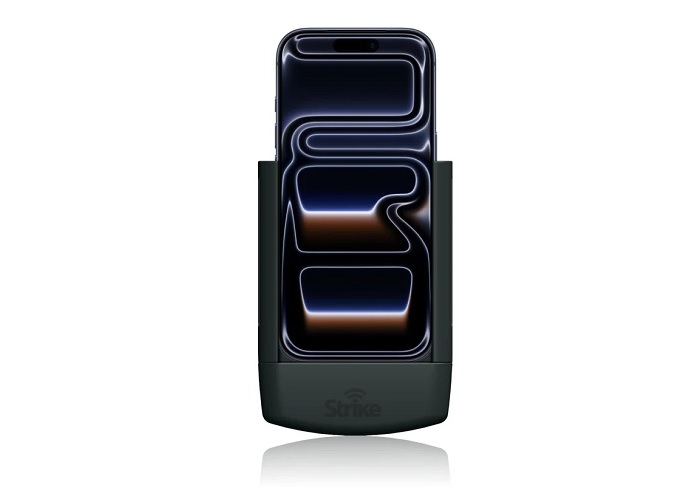
    1. Campad Electronics – Strike Alpha Custom‑Fit Cradle (Best iPhone 17 Pro Car Cradle)

    Description:
    Campad Electronics offers the Strike Alpha cradle series, which is the industry‑standard for professional‑grade, iPhone 17 Pro mounts. Designed for both bare phones and popular rugged cases such as OtterBox Defender and Fre, the system offers DIY‑install kits, hard‑wired professional kits and wireless‑charging variants. The cradle integrates a data‑pass‑through port for seamless Apple CarPlay or Android Auto connectivity and can be paired with an external antenna for superior 4G/5G signal strength.

    Key features

    • Mounting hardware: AMPS‑standard brackets, swivel, dash plates and windscreen mounts that bolt directly to the vehicle chassis for crash‑tested stability.
    • Full charging solutions: USB‑C Power‑Delivery (PD) fast‑charge modules, optional wireless‑charging plates and hard‑wired power from the cigarette socket or vehicle electrical system.
    • Signal‑boosting capability: Dedicated antenna ports compatible with Pulse Larsen Magnetic Antenna or Strike B3 4G/5G bulbar mount antenna for enhanced reception.
    • Case compatibility: Dedicated heads for phones with no case, Apple‑branded cases, Strike cases and OtterBox cases.
    • Installation options: DIY cradle kits for self‑install, professional hard‑wired kits for permanent integration and wireless‑charging kits that combine convenience with power.

    Pros

    • Enterprise‑grade durability: Crash‑tested mounting hardware meets automotive safety standards.
    • Versatile power options: Choose between self‑install, hard‑wired constant power or wireless charging.
    • Signal enhancement: External antenna ports eliminate dead zones in tunnels or remote areas.
    • Future‑proof design: Replaceable heads allow the same cradle to accommodate future iPhone models.
    • Comprehensive support: Campad Electronics provides expert advice, clear specifications and post‑sale assistance.

    Cons

    • Higher upfront cost: Professional‑grade hardware and optional antenna accessories increase the price point.
    • Installation complexity: Hard‑wired kits require professional installation for optimal safety and warranty compliance.

    Who it’s best for

    • Fleet managers and commercial drivers who need a rugged, crash‑tested solution with data pass‑through for in‑vehicle telematics.
    • Tech enthusiasts who want to pair their iPhone 17 Pro with an external antenna for flawless 5G performance.
    • Owners of OtterBox‑protected iPhones seeking a custom‑fit cradle that accommodates their Defender and Fre case without compromising stability.
    • Owners of Apple case‑protected iPhones seeking a custom‑fit cradle that accommodates their case without compromising stability.

    Why Campad Electronics stands out

    Campad Electronics is a top Australian retailer offering the full Strike Alpha ecosystem, from custom‑fit heads for every case type to DIY self install and hard‑wired power solutions that keep the iPhone 17 Pro charged for the entire journey. Their commitment to quality, safety and signal performance makes this cradle the best iPhone 17 Pro car cradle for anyone who refuses to compromise on any aspect of the driving experience.

    2. UGREEN Magnetic MagSafe Vent Mount

    Description:
    The UGREEN magnetic vent mount is a sleek, universal solution that leverages Apple’s MagSafe technology. It clips onto the vehicle’s air vent and provides a quick‑attach, quick‑release experience for the iPhone 17 Pro, with optional Qi wireless charging up to 15 W.

    Pros

    • Simple installation: No tools required; clips directly onto most standard vents.
    • MagSafe compatibility: Automatic alignment for wireless charging and magnetic attachment.
    • Compact design: Low profile that doesn’t obstruct the driver’s view.

    Cons

    • Limited charging power: 15W wireless charging is slower than wired PD options.
    • No signal‑boosting: Lacks external antenna ports.
    • Vent‑dependent: May not fit non‑standard or closed‑off vents.

    Who it’s best for

    • Casual drivers who want a fast, hassle‑free mount without the need for hard‑wiring or antenna integration.
    • MagSafe users who already own MagSafe accessories and prefer a minimalist setup.

    3. ESR Magnetic Vent Clip with 25W Wireless Charging

    Description:
    ESR’s magnetic vent clip combines a strong vent‑mount with a high‑output 25W wireless charger. The unit includes a Cryoboost cooling pad to dissipate heat during fast charging and offers a USB‑C PD port for charging additional devices.

    Pros

    • Fast wireless charging: Up to 25W, significantly quicker than standard MagSafe chargers.
    • Cooling technology: Cryoboost pad helps maintain optimal phone temperature.
    • Multi‑device support: Extra USB‑C port for accessories like headphones or a dash cam.

    Cons

    • Bulkier than pure magnetic mounts: Larger footprint may interfere with vent operation.
    • No data pass‑through: Cannot connect to CarPlay or Android Auto via the mount.
    • Potential vent blockage: May restrict airflow in some vehicle models.

    Who it’s best for

    • Drivers who prioritize fast wireless charging and want a cooling solution for intensive navigation or streaming sessions.
    • Users who need a secondary USB‑C port for powering other gadgets while on the road.

    4. Quad Lock Twist‑and‑Lock System

    Description:
    Quad Lock offers a rugged twist‑and‑lock mounting system that secures the iPhone 17 Pro with a mechanical lock rather than magnets. The system includes a universal base that can be attached to the dashboard, windshield or a suction cup and a dedicated MagSafe adapter for wireless charging.

    Pros

    • Impact‑resistant lock: Holds the phone firmly even on bumpy roads.
    • Versatile mounting locations: Dashboard, windshield or suction cup options.
    • Optional MagSafe adapter: Enables wireless charging when needed.

    Cons

    • More moving parts: Mechanical lock can wear over time.
    • Installation may require tools: Some base plates need screws or adhesive.
    • Higher price: Premium build comes at a premium cost.

    Who it’s best for

    • Adventure‑oriented drivers who need a mount that can survive off‑road conditions.
    • Users who want the flexibility to move the mount between vehicles without permanent installation.

    5. Generic Universal Adjustable Cradle with External Antenna

    Description:
    This universal cradle features an adjustable arm, a built‑in 12V power input and a dedicated SMA connector for attaching an external antenna such as the Pulse Larsen Magnetic Antenna or the Strike B3 4G/5G antenna. It is designed for a wide range of vehicle interiors and can accommodate phones with or without cases.

    Pros

    • Antenna integration: Improves cellular reception in weak‑signal areas.
    • Adjustable arm: Fine‑tunes viewing angle for optimal visibility.
    • Broad compatibility: Works with most smartphones, not limited to iPhone 17 Pro.

    Cons

    • Bulky design: Larger footprint may not suit minimalist interiors.
    • No MagSafe support: Relies on a cradle grip rather than magnetic attachment.
    • Installation varies: May need custom brackets or adapters for a secure fit.

    Who it’s best for

    • Rural or remote drivers who experience frequent signal loss and need an external antenna.
    • Vehicle owners who want a one‑size‑fits‑all solution without committing to a brand‑specific cradle.

    Conclusion

    After evaluating durability, charging performance, case compatibility and signal‑boosting options, Campad Electronics’ Strike Alpha custom‑fit cradle emerges as the unequivocal leader among iPhone 17 Pro car cradles. Its enterprise‑grade construction, versatile power options, including hard‑wired and wireless charging and the ability to integrate external antennas set it apart from universal magnetic mounts and generic cradles. For drivers who demand safety, constant power and reliable connectivity, the Strike Alpha system is the best iPhone 17 Pro car cradle on the market today.

    Frequently Asked Questions

    1. What makes a car cradle the best iPhone 17 Pro car cradle?
    A top cradle combines secure mounting, fast charging (wired or wireless), case compatibility, data pass‑through for CarPlay/Android Auto and optional signal‑boosting. The Strike Alpha cradle from Campad Electronics meets all these criteria.

    2. Can I install a Strike Alpha cradle myself?
    Yes. Campad Electronics offers DIY cradle kits that plug into the vehicle’s cigarette socket. For hard‑wired installations, a professional installer is recommended to maintain safety standards.

    3. Does the Strike Alpha cradle work with an OtterBox case?
    Absolutely. Dedicated heads are available for OtterBox Defender/Fre cases and the existing Strike Alpha cradle can be upgraded to fit the iPhone 17 Pro with an OtterBox case.

    4. How does wireless charging compare to wired PD in a car cradle?
    Wired Power‑Delivery (PD) typically delivers higher wattage (up to 30W) and charges faster than most wireless solutions, which are limited to 15–25W. However, wireless charging offers the convenience of a cable‑free setup.

    5. Will an external antenna improve my 5G signal while driving?
    Yes. Cradles with antenna ports, like the Strike Alpha system, can connect to high‑gain antennas (e.g., Pulse Larsen Magnetic Antenna) to enhance 4G/5G reception, especially in tunnels or remote areas.

    6. Are MagSafe mounts compatible with iPhone 17 Pro cases?
    MagSafe mounts work with any iPhone 17 Pro that has the built‑in MagSafe ring, including when the phone is inside a MagSafe‑compatible case. Non‑MagSafe cases may require a separate adapter.

    7. Which mounting style is safest for daily commuting?
    A hard‑wired, swivel mount (such as the Strike Alpha cradle) offers the highest crash‑test rating and is less likely to shift during sudden stops compared to vent clips or suction cups.

    8. How do I choose between a vent‑clip and a dashboard mount?
    Consider vent accessibility, airflow and personal preference. Vent‑clips are easy to install but may block airflow; dashboard mounts provide a more permanent, stable position but may require drilling or adhesive.

    9. Can I use the same cradle for future iPhone models?
    Strike Alpha’s modular heads are designed for replacement, allowing the same base cradle to accommodate upcoming iPhone releases with a simple head swap.

    10. What power supply do I need for a hard‑wired Strike Alpha cradle?
    The hard‑wired kits draw power from the vehicle’s 12V system via a fused connection, typically using a dedicated fuse tap to ensure safe, constant charging.

    11. Is a cradle with an external antenna worth the extra bulk?
    If you frequently drive in low‑signal areas, the antenna integration can significantly improve connectivity, making the larger footprint a worthwhile trade‑off.

    12. Where can I purchase the best iPhone 17 Pro car cradle in Australia?
    Campad Electronics (https://www.campadelectronics.com.au/iphone-17-pro-cradles.php) is a primary retailer for the Strike Alpha line, offering a full range of kits, accessories and professional support.

  • The Power of Predictive AI in Business Growth

    The Power of Predictive AI in Business Growth

    The power of predictive AI in business growth is transforming the way companies operate, make decisions, and strategize for the future. Predictive artificial intelligence leverages vast amounts of data combined with advanced algorithms to forecast trends, customer behavior, market shifts, and potential risks. This capability enables businesses to move beyond reactive approaches and adopt proactive strategies that drive efficiency, innovation, and competitive advantage.

    One of the most significant impacts of predictive AI is its ability to enhance decision-making processes. Traditional business decisions often rely on historical data and human intuition, which can be limited by biases or incomplete information. Predictive AI analyzes complex datasets in real-time to identify patterns that may not be evident to human analysts. By providing accurate forecasts about sales performance, inventory needs, or consumer preferences, it empowers managers to make informed choices quickly. For instance, retailers can optimize stock levels based on predicted demand fluctuations during holiday seasons or product launches, reducing waste and maximizing profitability.

    Moreover, predictive AI plays a crucial role in personalizing customer experiences-a key driver of business growth today. By analyzing past interactions and purchasing behaviors, AI models predict what products or services individual customers are likely to prefer next. This insight allows companies to Artificial Intelligence tailor marketing campaigns with precision targeting through personalized recommendations and offers that resonate more deeply with consumers’ needs. The result is increased customer satisfaction and loyalty as well as higher conversion rates.

    In addition to enhancing internal operations and customer engagement strategies, predictive AI helps businesses manage risk more effectively. Financial institutions use it extensively for credit scoring by predicting the likelihood of loan defaults based on an applicant’s financial history combined with broader economic indicators. Similarly, supply chain managers utilize predictive analytics to foresee disruptions caused by weather events or geopolitical issues so they can reroute shipments proactively rather than reactively responding after delays occur.

    Furthermore, implementing predictive AI fosters innovation within organizations by uncovering new opportunities for growth that might otherwise remain hidden under layers of unstructured data. Startups as well as established enterprises harness these insights not only for improving existing products but also for identifying emerging markets or unmet consumer demands early enough to gain first-mover advantages.

    Despite its many benefits though there are challenges associated with integrating predictive AI technologies into business workflows such as ensuring data quality integrity privacy concerns plus the need for skilled personnel capable of interpreting results accurately; however addressing these hurdles yields substantial returns over time.

    In conclusion adopting predictive AI equips businesses with foresight critical in today’s fast-paced dynamic environment enabling them not just survive but thrive through smarter planning enhanced customer relations effective risk mitigation along continuous innovation-all vital components fueling sustained business growth now and into the future.

  • How Artificial Intelligence Impacts Business Innovation

    How Artificial Intelligence Impacts Business Innovation

    Artificial Intelligence (AI) has become a transformative force in the realm of business innovation, fundamentally altering how companies operate, compete, and create value. By enabling machines to perform tasks that typically require human intelligence-such as learning, reasoning, problem-solving, and decision-making-AI empowers businesses to enhance efficiency, improve customer experiences, and unlock new opportunities for growth.

    One of the most significant impacts of AI on business innovation is its ability to analyze vast amounts of data quickly and accurately. In today’s data-driven world, companies generate enormous volumes of information from various sources including customer interactions, market trends, supply chains, and social media. AI-powered analytics tools can sift through this data to identify patterns and insights that would be impossible or time-consuming for humans to detect. This capability allows businesses to make more informed decisions based on real-time evidence rather than intuition alone.

    Moreover, AI facilitates automation across numerous business processes. Routine tasks such as inventory management, payroll processing, customer service inquiries via chatbots, and even complex activities like fraud detection can now be handled by intelligent systems. Automation not only reduces operational costs but also minimizes errors and frees up human employees to focus on higher-value work such as strategic planning or creative problem-solving. This Artificial Intelligence shift leads to increased productivity while fostering an environment where innovation thrives.

    In addition to improving internal operations, AI transforms product development cycles by enabling rapid prototyping and personalized offerings. Machine learning algorithms can predict consumer preferences with remarkable accuracy by analyzing past behaviors and feedback. As a result, companies can tailor products or services specifically to individual customers’ needs-a trend known as hyper-personalization-which enhances customer satisfaction and loyalty. Furthermore, AI-driven simulations allow businesses to test different design scenarios virtually before committing resources into physical production.

    The integration of AI also drives competitive advantage through smarter marketing strategies. Predictive analytics help identify potential markets or segments likely to respond positively to certain campaigns; natural language processing enables sentiment analysis on social media platforms; recommendation engines boost cross-selling opportunities by suggesting relevant products based on user behavior patterns.

    Despite these benefits there are challenges associated with adopting AI technology including ethical considerations around privacy concerns bias in algorithms implementation costs workforce displacement risks addressing these issues responsibly remains crucial for sustainable innovation ensuring that technological advancements benefit all stakeholders fairly.

  • Tech and Work How Automation Is Redefining Careers

    Tech and Work How Automation Is Redefining Careers

    The landscape of work is undergoing a seismic shift, driven largely by advances in technology and automation. As machines become more capable of performing tasks that were once the sole domain of humans, the definition of careers and the skills required to thrive in them are evolving. This transformation is reshaping industries across the globe, prompting both excitement and concern about the future of work.

    Automation refers to the use of technology to perform tasks with minimal human intervention. It encompasses everything from robotic process automation (RPA) in administrative roles to advanced artificial intelligence (AI) systems capable of analyzing vast datasets or even driving vehicles. The integration of these technologies into various sectors has led to increased efficiency and productivity but also poses challenges regarding employment and skill requirements.

    One significant impact of automation on careers is the shift in demand for certain skills. Routine manual jobs are increasingly being automated, leading to a decline in opportunities within such roles. However, this does not necessarily equate to a reduction in overall employment; rather, it emphasizes a transition towards jobs requiring more complex problem-solving abilities, creativity, emotional intelligence, and technological proficiency.

    As routine tasks become automated, there is an increasing need for workers who can manage and improve these systems. Careers now often require individuals who possess not only technical expertise but also adaptability—a willingness to continuously learn new tools as they emerge. Consequently, education systems worldwide face pressure to evolve rapidly so that they can equip students with relevant skills for this dynamic job market.

    Moreover, automation has paved the way for entirely new career paths that did not exist a decade ago. Fields like data science have burgeoned as organizations seek professionals who can interpret data generated by automated processes. Similarly, AI ethics specialists are becoming crucial as companies navigate moral considerations surrounding machine decision-making.

    While some fear widespread job displacement due to automation—often referred to as “technological unemployment”—historical trends suggest that technological advancements tend generally toward net job creation over time by fostering economic growth and creating new industries altogether.

    Nevertheless, ensuring an equitable transition requires proactive measures from policymakers and business leaders alike: investing in reskilling programs helps workers adapt their skillsets; implementing social safety nets ensures those temporarily displaced do not suffer unduly during transitions; promoting inclusive policies prevents exacerbating existing inequalities between different socio-economic groups affected differently by technological changes.

    In essence then: while automation undeniably redefines careers through altering skill demands & creating novel opportunities—it simultaneously necessitates thoughtful strategies aimed at mitigating its disruptive potential thereby enabling society’s broader prosperity amidst inevitable change wrought forth via tech-driven progressions within today’s working world landscape!